
Jung’s ego-Self axis and the return to creativity
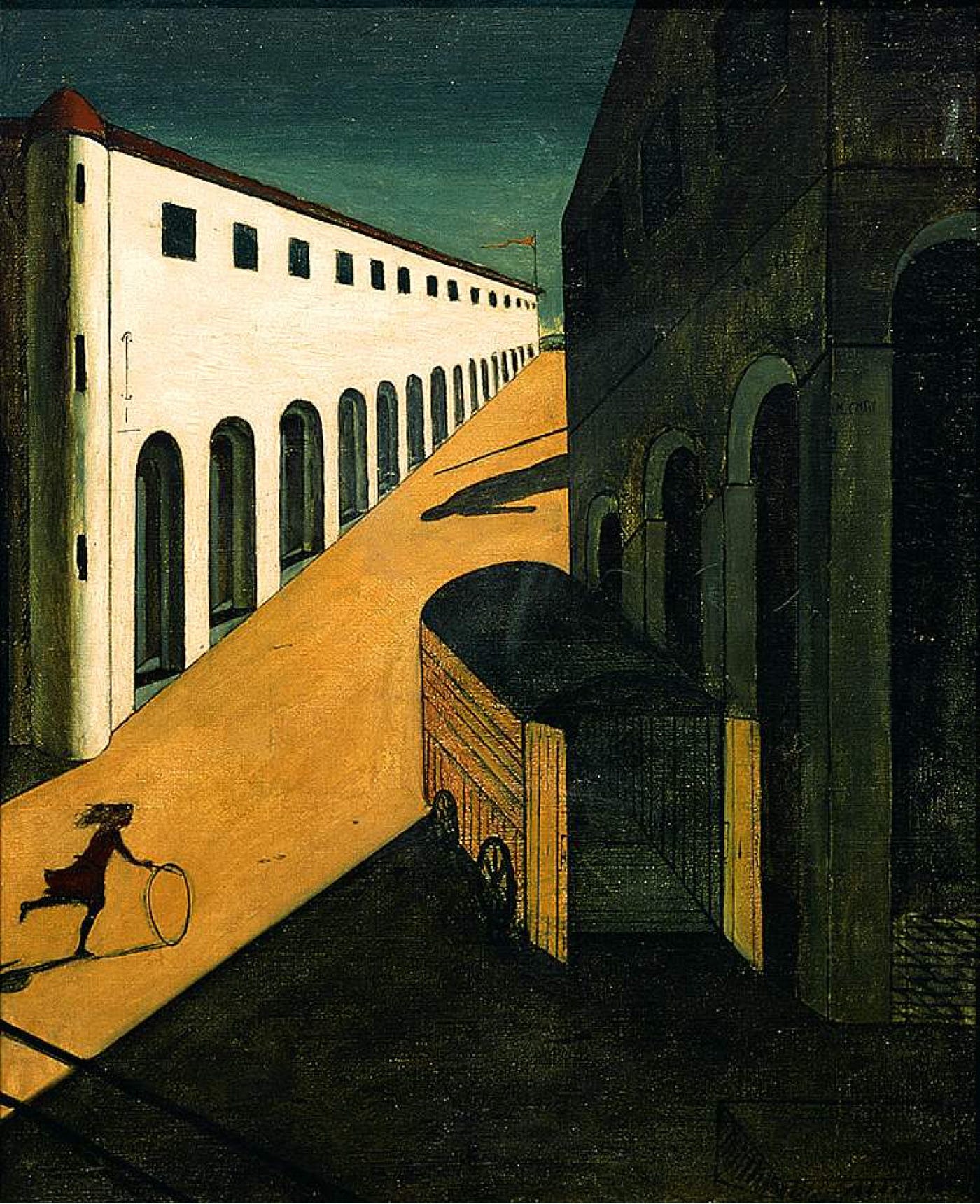
There’s a sense of urgency that comes with writer’s block. Flooded by a kind of indifferent anxiety, we blankly stare at the page, attempting to wrestle our creativity into existence.
Motivation, once inspired, has met an absence of feeling.
Creative and psychic energy, libido, has become inaccessible.
Carl Jung described the ego-Self axis as the relationship between our conscious ego, and the totality of our psyche’s Self. Ego is our awareness of our lives and who we are, where Self is the entire representation of what we know and don’t know in ourselves. If ego is the lens that we view life through, Self is the more awe-inspiring aspects in what can surprise us about ourselves, as well as what remains deeply mysterious.
When we feel art resonate deeply, there often results a conscious sense of awe and wonder. The ego’s conscious experience of Self is that bridge, the ego-Self axis, to elements of life that can be experienced as euphoric, unknown, or existentially unsettling.

Regression and Inflation
In the creative process, ego can experience a merger with Self, leading to a sort of creative mania, or grandiosity.
In a creative merger with Self, we become inflated, our objectivity lost to our unconscious. Anything and everything is possible. It’s the euphoria in creative highs, obsessive practice, an addiction to process and the “spiritual” energy of the Self.

The more inflated we become, the more we feel inclined to stay in this merger. We live in a state of creative regression, staying within what is comfortable, unable to rationalize our ideas into completion.
Losing sight of how our creativity can transform, we hoard our projects, we isolate, or wear our ideal and grandiose selves out into the open. We forget the roots of our artistry, our conscious ground.
Eventually, we pull endlessly at the same, tired threads with little enthusiasm, despite being surrounded by instruments, brushes, cameras, friends, connections, our creative lifestyles. The castles we’ve built around our craft have led to flatness, claustrophobia, or aimless meanderings.
When regression goes too far, what speaks to us creatively becomes too private, or too unintelligible. There’s a loss of resonance with how our work communicates with others. We’re “lost in our own world.”
Our creativity loses a sense of air and spaciousness, losing room to breathe. Writer’s block becomes the desperate and stifling merger with the Self.
Depression and Alienation

Ego and Self can also become completely alienated from one another, leading to feelings of cynical, creative disconnect.
For whatever reason, our creative process seems to have inspired our writer’s block. Something in us silently protests, and has decided that it is better not to feel. Our apathy has become a contract to preserve what remains of our work, a depressive monument towards our ego’s once-connection to Self. We lament the lost access to our abundant and creative energy.
Lost in a purely cerebral orientation, everything is done in a “thoughtless,” intellectualized and haphazard manner. Walled off from inspiration, a resentment develops towards what we’ve created.
When the tether to the creative channel disappears, apathy armors us from the reality of total loss of Self.
In creative regressions, we withdraw into those child-like states. Like kids in a sandbox, we create wildly without much “conscious” effort. It’s in the spirit of play, “submerged” in Self energy, in a creative madness. In fantasies, in “big” and “wild” ideas, in late nights where you completely lose track of time. Reality gives way to fantastical one. Our egos become inflated and identified with Self.
But in alienation, things become too concrete. Creative projects get filed away, never quite good enough to see the light of day. We cast heavy standards onto our work, too punitive, too “realistic” about our craft.
It imposes increasing responsibility and care upon him… All that was formerly so fascinating and important, has lost its power to interest him. And as Solomon said: “The grasshopper has become a burden.”
Relative to the ego-Self axis, inflation and alienation are both unconscious orientations on opposite poles. Inflation means “Self absorption,” where alienation is “Self denial.”
The Unconscious

Our creative libido depends on the ego-Self axis working in tandem with one another. Regression and alienation are not necessarily bad things, but purely signals of how our ego is operating with Self.
If we are regressed, reality has become buried. If we are alienated, reality has become too much.
A lot of this can be inevitable, as well. Jung noted that, every quarter of a person’s life, we can fall out of alignment with our “center,” sometimes so much so that we fall into deep depressions. In mid-life or quarter-life crises, unconscious elements have simply become too large to ignore, or our ego has achieved too much control in maintaining grandiose fantasies.
We lose contact with our creativity and experience, a “lowering of the mental level.” We’ve simply lost access to that creative sight of something unknown and unseen, the pathway towards possibilities in the conscious and unconscious realms.
The unconscious has simply gained an unassailable ascendancy; it wields an attractive force that can invalidate all conscious contents — in other words, it can withdraw libido from the conscious world and thereby produce a ‘depression’… But as a result of this we must, according to the law of energy, expect an accumulation of value — i.e., libido — in the unconscious. — Jung, Coll. Wks., 8
We experience symptoms in nightmares, in envying others’ artistic endeavors, in our actions and inactions. Energy gets expressed in dissociative and addictive processes, in mindless activities, in keeping creative Self energy out. Our unconscious seems to cast a large shadow on our lives, our conscience trying to point out what needs connection.
Writer’s Block

Writer’s block shows the potential for our mutuality in relationship with it, anhedonia signaling a Self that has become “dammed” up in repression, or in the attempts to reinflate and stay within regressive attitudes towards life.
We’re at the doorstep of what matters, but we’re left unanswered. We step into creative acts with high expectations, but we’re met with silence. We instead meet a dread that we weren’t previously aware of. We demand our artistry answer us, but instead it becomes a reminder of what is to be avoided.
We realize the creative pathway is more disturbing than we thought. Our hands feel heavy, our cortisol spikes. We freeze, and we flee. Creating in the face of dread has become a dangerous, highwire act.
Writer’s block is the stuff of effort. Shoveling, digging, scraping. Forcing. Trying. Bashing. Trying too much, trying too hard. We are trying to be something. Trying to not be nothing.
We try to unearth the seed that has already been planted, so we can plant it once more. We move through familiar pathways that once carried meaning. We become nostalgic, melancholic, and taken by heavy moods.
With writer’s block, we cling onto the processes that once held value, attempting to recycle Self through the narrow scope of our egos. We’re met with dead ends.
Creative Consciousness

And so a time is likely to come when the unconscious withdraws further and further, dragging the conscious libido with it, into inaccessible depths, and a second experience of the wilderness will be encountered on a different, a more profound level energy — Esther Harding
When we are companions to our inspiration, there is a direct channel to what feels alive.
Consciousness is the full body, top-down experience. Spirit, to mind, to body. We feel we are channeling something deeper than our ego.
The ego-Self axis can be seen as a mirror to what Arieti described in creativity as primary, secondary, and tertiary processes.
“All that glitters is gold.” This is the grandiose inflation of the ego. We’re lost in the electricity of the moment, and lose orientation towards a conscious attitude.
“All that glitters is not gold.” This is a step into creative consciousness. Without becoming lost in depression or alienation, we develop a healthy objectivity between ego and Self, where we melt our ideas down to their essence.
Healthy ego-Self axis alignment is the conscious, grounded connection with Self. Not regressed and Self absorbed, not alienated and Self denying, but working in tandem with Self.
Psychoanalyst Ernst Kris noted that creative people have strong egos that permit a creative regression, a withdrawal out of reality, and then subsequent return to normality. It is a back and forth movement, understanding creativity’s time and place in our lives, and also understanding its ability to consume us and carry us away when conscious awareness is severed.
Alchemy
“‘The creative act… is the defeat of habit by originality.’ It’s as simple, unsentimental and mysterious as that.” — Richard Gilman.
When we allow our sentimentality to be torn apart, our writer’s block softens.
The tired, lead-laden monoliths that resulted from our ego-Self inflation or alienation become the raw material for ego-Self transformation. This is alchemy.
Inverse to alienation, we fully feel our human limitations in being a container for Self energy. We grieve the impossibly large ask of the Self on our egos, to be the 24/7 channel. We find new ground to orient ourselves towards the transcendent function, the bridge between conscious wisdom and Self discovery.
If the first iterations of our creative endeavors are individually spirited, enthralling, and fantastical, final ones are a step into what is collectively soulful, embodied, and witnessed with wonder.
We take the “gold’s glitter,” what remains of what is let go, to enhance something entirely new. The creative landscape becomes lighter, the individual elements sharper.

Like divers, the choice is made to regress into Self, with a devotion to practice. A return is made back to the surface with a transitional object in hand, the concrete, comforting token of our creative efforts.
In object relations, it’s the move out of identifying with our internal saboteur that casts judgement on our creativity, that keeps us small, contained, and alienated in our egos. We also resist the impulse to be immediately swallowed by the libidinal, creative, and primal desires that Fairbairn described in “love as hunger.”
What inspired us cannot be kept. Our momentary and limited ability to contain the scope of our inspiration affects us deeply. It is unable to be everything for us, the same way we are unable to be everything for it.
What is enjoyed in the creative moment will be gone. We grieve the impermanence of creative desires, but acknowledge the thread backwards and forwards it has created for us. A narrative clarity develops.
We allow the tower of our grandiose expectations to come down, and fully feel the terror behind writer’s block. We allow expectations to burn away.
Simplification, rather than complication. Distillation, rather than preservation.
Without the heaviness, excess, drama, or guilt of maintenance. Just the essential elements, which were always meant to be reached into with time. Underneath initial inspiration, was the simpler, more meaningful thing, waiting to be transformed. We melt through the new, raw material.
Able to distill our experiences into a passage, into a note, into an image, we rest.
andystuder.com